

READ TIME: ~3 MINUTES | WORDS: 668
WHY IT MATTERS
Pitch tipping is not new. Baseball has always chased the ability to pick up tells on what the pitcher is about to throw.
The new part is the mechanism for doing it and the scale it can provide.
What used to revolve around a gut-feel, a sharp-eyed scout, a dugout whisper, and/or hours of manual video can now be turned into a repeatable, systematic process for a detection problem.
A March 2026 research paper on 119,561 professional pitches showed that body kinematics alone predicted pitch type with 80.4% accuracy before ball flight.
The same study found that 64.9% of the predictive signal came from the upper body, with wrist position contributing 14.8% on its own.
That matters because the edge is no longer just spotting an obvious tell.
The edge is building systems that find subtle pre-release signals faster than a human can.
ZOOM IN
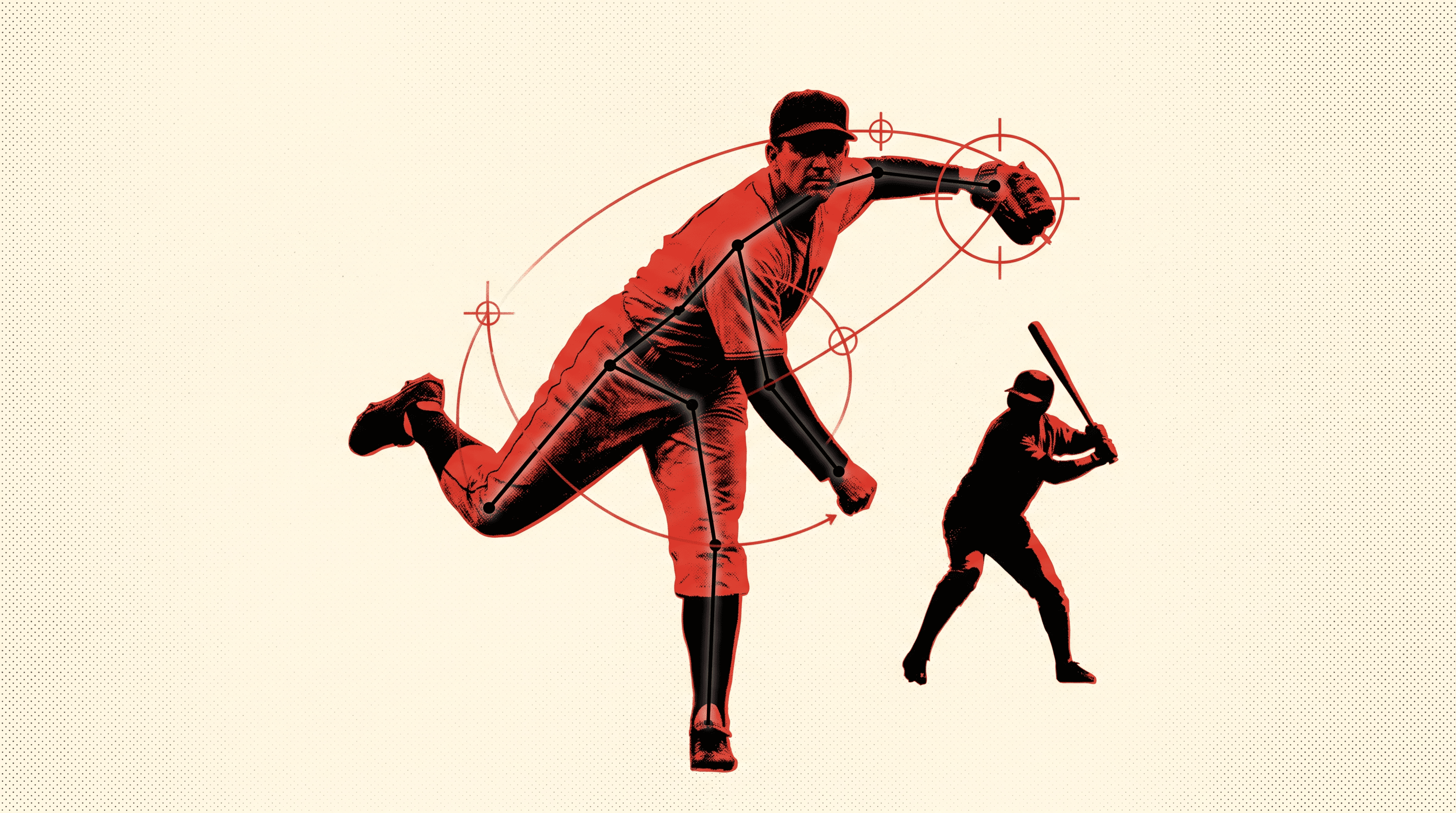
In the arXiv paper — Interpretable Pre-Release Baseball Pitch Type Anticipation from Broadcast 3D Kinematics — the authors isolated the body from the ball while using broadcast video.
Enabling them to:
Reconstruct 3D pose pitching sequences from 119,561 professional pitches.
Detect key delivery events.
Build a classifier from 229 kinematic features (a model that identifies based on the movements of a pitcher’s body).
➞ Where the signal actually lives
The paper found:
64.9% of the predictive signal came from the upper body.
35.1% from the lower body.
19% from eyes + nose was the most informative joint group.
14.8% from combined wrist joints.
12.2% from combined ankle + knee joints.
The model also looked beyond body parts to posture and balance cues:
Trunk lateral tilt was the strongest individual signal.
Center of gravity also showed up repeatedly among the top features.
There is meaningful pre-release information in the delivery, but it doesn’t tell the whole story.
The paper also draws a clean boundary around what it can and cannot capture.
The authors point out that grip-defined variants, like four-seam vs. two-seam fastballs, are not separable from pose alone.
Ultimately, using only body movement — no ball flight, no velocity, no spin — the model classified eight pitch types at 80.4% accuracy.
ZOOM OUT
The killer application for the type of pitch-tipping detection model we’re talking about is all about game planning.
Hitter prep: if a model can surface pre-release cues by pitch type, hitters can go into games with decisive tells to look for — instead of hoping to spot them live.
Advance scouting: teams can search entire video libraries for repeatable cues, then rank them by confidence, rather than relying on manual tracking and memory.
Internal pitcher audits: organizations can check whether a prospect’s pitches carry a distinct movement signature before opponents exploit it.
Player development: the same model that finds a tell can also help remove it by tracking whether the delivery is actually getting cleaner over time.
This is the same pattern you see everywhere else in baseball analytics.
A hidden signal becomes measurable.
Then it becomes searchable.
Then it becomes something teams can model, coach, and optimize.
Pitch tipping is just another problem/solution entering that pipeline.
THE BOTTOM LINE
Picking up on pitchers tipping their pitches is moving from a vague baseball-y instinct toward a measurable, modelable problem.
80.4% pitch-type prediction from body movement alone shows that pre-release pitch tipping is a real — not just ballplayer lore, but true signal to pick up on.
Using single-camera broadcast video suggests the model could be viable outside of big-league lab conditions.
Perfectly highlighting where the future of baseball is headed in general.
More and more parts of the game that have historically been based on feel can be measured, modeled, optimized, and used by teams and organizations to inform actionable game planning for their players and coaches.