

READ TIME: ~3 MINUTES | WORDS: 598
WHY IT MATTERS
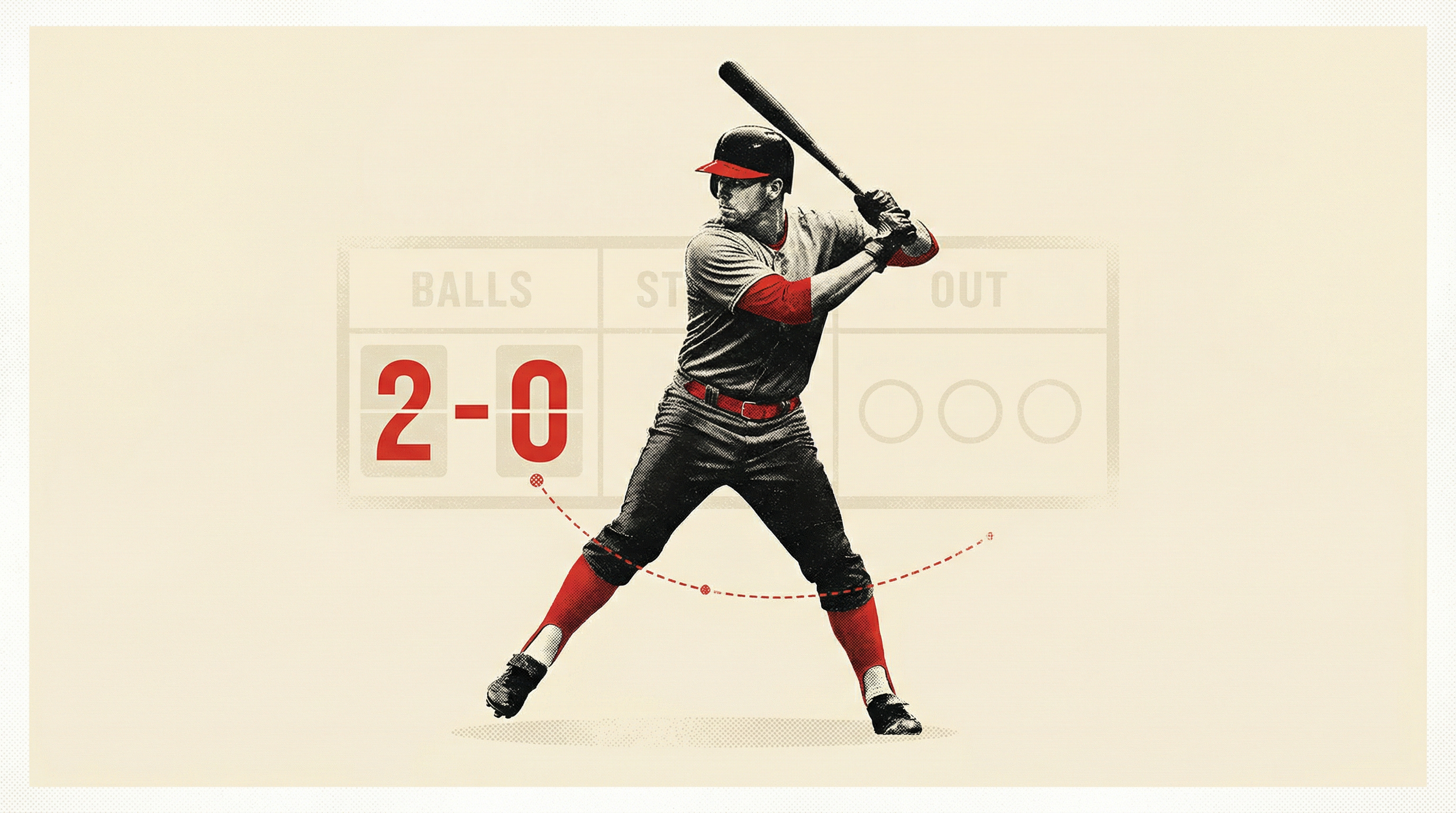
The first weeks of the season have shown teams are getting into hitter’s counts, but many of them are still turning into pitcher wins.
A hitter’s count is supposed to be where damage starts, but early 2026 data is pointing to a different truth:
The count advantage only matters if the swing decision matches it.
If you get ahead but then expand anyway, the count was just decoration.
That’s the part Alex Cora called out after Boston’s 3-2 loss to San Diego on April 4 — his line was simple:
“We’ve got to swing less.”
Not because aggression is bad, but because aggression at the wrong time turns it from an advantage hitter to an advantage pitcher.
ZOOM IN
Swing Decisions = the choices hitters make about which pitches to attack, take, or spoil based on count, zone, and game situation.
➞ Boston is the cleanest early example:
24 runs: tied for fewest in MLB through eight games on April 4, per MLB.com.
.294 OBP: 23rd in the majors through that point.
8.1% walk rate: 24th in MLB.
28.1% strikeout rate: 26th in MLB.
That profile tells you exactly what Cora was talking about: The Red Sox weren’t just getting beat by stuff — they were giving away too many plate appearances after getting leverage in the count.
Hitters’ counts don’t create offense by themselves. They create the opportunity for offense when paired with good swing decisions.
And it seems like MLB’s youngest players might have a leg up in this area compared to the past:
MLB’s early-season roundup noted that rookie hitters posted an .851 OPS through every team’s first six games.
The best mark for rookies in that span since at least 1901.
Could this be more than just “young guys are hot?”
Perhaps it’s a clue that in today’s age of player development, the hitters who are surviving are the ones turning favorable counts into strong swing decisions instead of just bigger swings.
ZOOM OUT
For years, the language of hitting treated aggression as a virtue in itself:
Win the count.
Hunt your pitch.
Do damage.
That’s still true — up to a point. But the best hitters aren’t just trying to swing hard once they get ahead.
They’re selectively violent.
That sounds subtle, but it changes the whole at-bat:
2-0 and 3-1 used to mean “green light.”
Now they’re better viewed as information counts where the pitcher is more likely to show intent, and one take can tell you as much as one swing.
The real edge: forcing the pitcher into a smaller attack shape before committing.
A 95 mph swing on the wrong pitch in a 2-0 count is still a win for the pitcher.
THE BIG PICTURE
The mistake a lot of hitters make in leverage counts: they think the advantage means they should swing more.
Usually, it means the opposite.
➞ A good 2-0 count buys three things:
Pitch-type clarity: the pitcher is less likely to expand his menu of pitches.
Location predictability: the zone shrinks toward what he can land for a strike.
Miss protection: even if you take, you’re still likely in control of the at-bat.
Once you know how the pitcher wants to survive the count, the next swing gets cleaner.
Long story short: the best hitters aren’t succeeding because they swing more once they get ahead. They’re succeding because they are focused on better swing decsions.